
Orofacial Myofunctional Therapy (OMT)
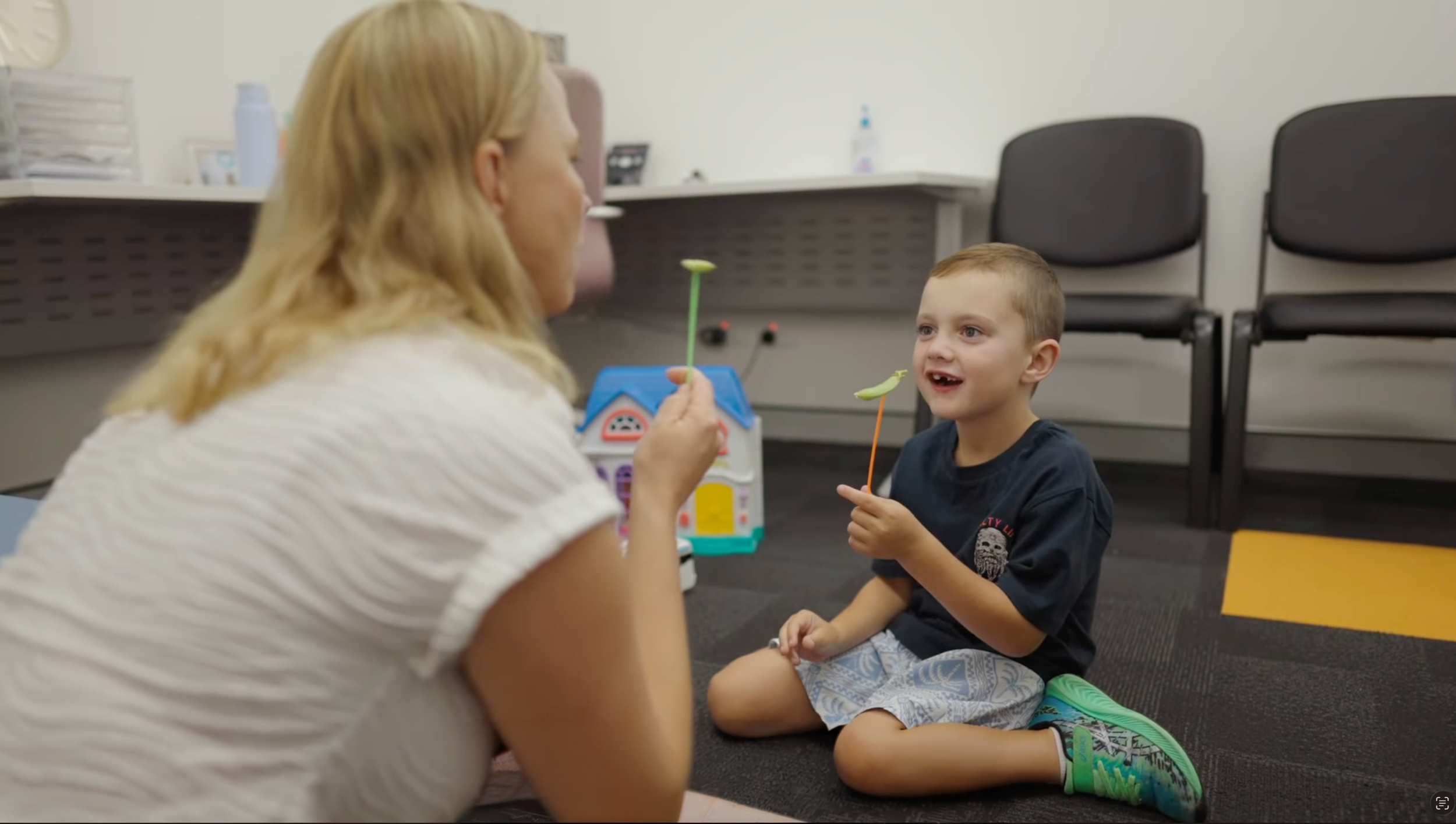
Orofacial Myofunctional Therapy (OMT) teaches the correct tongue position for speech and swallowing, as well as the correct resting position.
Breathing:
The change in the structure, not only affects how we say our speech sounds and how we swallow, but also how we breath (function). The roof of our mouth, is the floor of our nose. If the palate is high, the nasal floor is high (form), impacting our nasal breathing (function). The open-mouth posture, with the tongue protruding, encourages mouth breathing, and snoring.
The tongue, the palate, speech, and the spiral.
Form drives function. Function drives form. Our palate is shaped by our tongue, lightly suctioned onto the hard palate and resting lightly against it. When the tongue is resting on the floor of the mouth for whatever reason (function), it does not drive the horizontal growth of the palate, and the palate becomes high and narrow (form). This decreases the space in the mouth, and there is insufficient space for the tongue inside the mouth. The tongue is now resting between the teeth (function). This is one of the reasons for interdental speech, where the person says his t,d,n, and s sounds between his teeth – a lisp. (Function). Now, the teeth grow around the tongue, causing an openbite.
Reasons for low tongue resting posture:
When your child becomes a “problem feeder”, he will have less than 20 foods in his diet. Eating involves ALL our senses: seeing, moving (vertibular), smelling, touching, tasting, hearing, proprioception (knowing where your body parts are without looking), and interoception (hunger, needing the toilet, being hot or cold). A child that has difficulty to process and integrate sensory information, is highly likely to have challenges with eating. Your child might be limited in the number of foods they eat or refuse a whole group of food or texture from their diet. The progress in sensory feeding therapy is often slow, but intervention keeps the spiral in the right direction.
Sleeping
Snoring is always abnormal. It is an audible sign of the body fighting for air. When a child snores, it affects his sleeping, which affects his learning.
Intervention
OMT changes the direction of the spiral. By training the body to function differently, while it is still a bit uncomfortable, it changes the habits, and gradually the structure grows around the new habits to. Often orthodontist or other professionals will be part of the team to support a palate expansion or tightness in the body.

Book an Appointment
Book an appointment for your child to see a Speech Pathologist now.
Book Now
Contact Us
Phone
+61 8 6406 1985
Little Lions provides Therapy for Kids in-clinic (northern suburbs of Perth, Western Australia), via Telehealth, and across the community, with shorter wait times and no referral required.
NDIS and private clients welcome!